Filipinos in South Korea
Showing posts with label USA. Show all posts

Global Research Pointed: USA, Loida Lewis and Liberal party behind the ISIS attack in the Philippines

 Global Research Pointed: USA, Loida Lewis and Liberal party behind the ISIS attack in the Philippines
GlobalReaseach.ca pointed out who are behind the Islamist terrorist attack in Marawi City in Southern Philippines

In the article written by Stephen Lendman lives in Chicago, USA, he pointed that Washington, Loida Lewis and the Liberal Opposition party in the Philippines are behind the IS attack in Marawi a step to oust Duterte

Why is ISIS Operating in the Philippines?

In response to violence allegedly instigated by ISIS in the Philippines, President Rodrigo Duterte declared martial law in Mindanao, imposed military rule, and threatened to extend it nationwide to defeat the threat.

What’s going on? Why did ISIS begin operating in the Philippines? Weeks after taking office in mid-2016, Duterte blasted Western imperial Middle East policies, saying the Obama administration and Britain “destroyed the (region)…forc(ing) their way into Iraq and kill(ing) Saddam.”

“Look at Iraq now. Look what happened to Libya. Look what happened to Syria.”

He blasted former UN Secretary-General Ban Ki-moon for failing to act responsibly against what’s gone on for years – on the phony pretext of humanitarian intervention and democracy building.

He called Obama a “son-of-a-bitch” for his unaccountable actions – no way to make friends in Washington, especially if his geopolitical agenda conflicts with US aims.

Philippine President Rodrigo Roa Duterte meeting with Russian President Putin
Philippine President Rodrigo Roa Duterte meeting with Russian President Putin. Duterte cuts short trip to Russia after declaring martial law in southern Philippines due to Islamist terrorism attack in Marawi City. Photo: Japanese Times

On the day he declared martial law, he met with Vladimir Putin in Moscow for discussions on future military and economic cooperation.

He seeks improved economic and military ties with China. Ahead of visiting Beijing last October, he said

“only China…can help us,” adding:

“All that I would need to do is just to talk and get a firm handshake from the officials and say that we are Filipinos and we are ready to cooperate with you, to help us in building our economy and building our country.”

“If we can have the things you have given to other countries by the way of assistance, we’d also like to be a part of it and to be a part of the greater plans of China about the whole of Asia, particularly Southeast Asia.”

He promised to cool tensions over South China Sea disputes.

“There is no sense fighting over a body of water,” he said.

“We want to talk about friendship (with Beijing). We want to talk about cooperation, and most of all, we want to talk about business. War would lead us to nowhere.”

He announced no further joint military exercises with America, saying he’s open to holding them with China and Russia.

Shifting away from longstanding US ties doesn’t go down well in Washington. Are efforts by ISIS to establish a Philippines foothold part of an anti-Duterte Trump administration or CIA plot independent of his authority?

Null
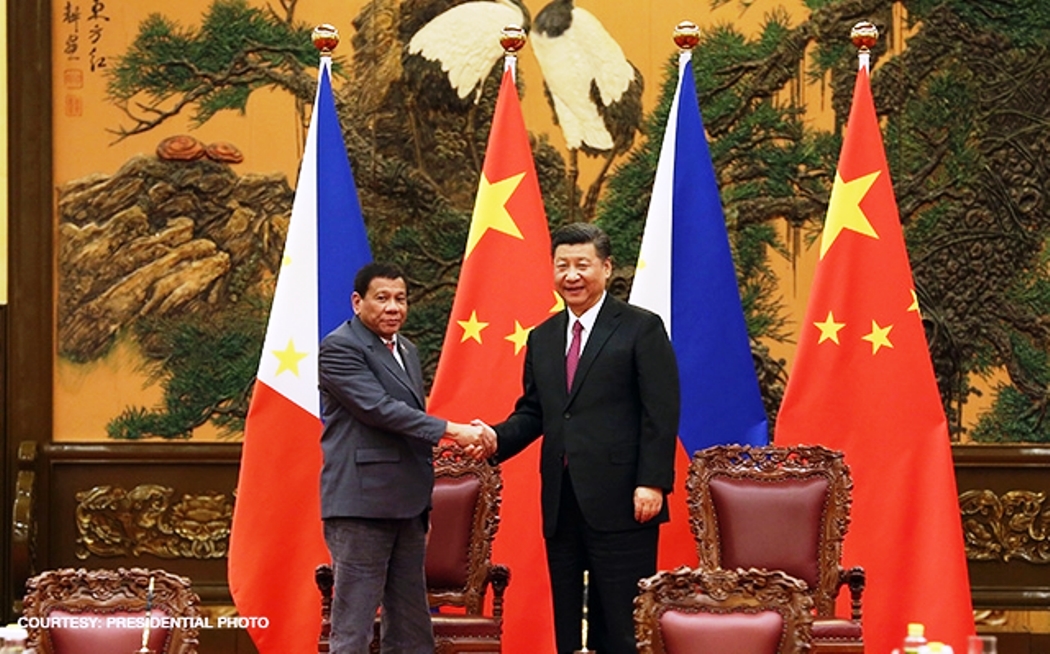
Philippine President Rodeigo Roa Duterte meeting with Chinese President Xi Jinping cooling down the tension in South China Sea and promised cooperation, progress, peace and stability of the Asian Region.

According to a June 2 Duran.com report, retired Philippine military official Abe Purugganan claims ISIS violence in Mindanao is part of an opposition Liberal Party plan to undermine Duterte and oust him from office – citing information from a party whistleblower.

Below are the comments The Duran posted, saying:

“There is a lot of noises and chatters flooding the cyberspace, you got to use your discernment to filter all these information.”

“LETS PLAY FIRE WITH FIRE,” explaining “(t)hese are the exact words stated by Loida Lewis and her fellow oligarchs on a meeting months ago with Liberal Party members abroad,” adding:

Their plan is to use ISIS or ISIS-connected terrorists to instigate violence and chaos in Mindanao, wanting Duterte’s government destabilized and ousted.

If the information reported is accurate, it explains what’s now going on, likely to worsen, perhaps spread to other parts of the country.

Last week, Duterte said

“if I cannot confront (ISIS terrorists threatening the country), I will resign. “If I am incompetent and incapable of keeping order in this country, let me step down and give the job to somebody else.”

If US dirty hands are behind the ISIS insurgency, he’s got a long struggle ahead, trying to overcome the attack on him and perhaps Philippine sovereignty.

Stephen Lendman lives in Chicago. He can be reached at lendmanstephen@sbcglobal.net.
His new book as editor and contributor is titled “Flashpoint in Ukraine: How the US Drive for Hegemony Risks WW III.”

http://www.claritypress.com/LendmanIII.html

Visit his blog site at sjlendman.blogspot.com.

The original source of this article is Global Research
Copyright © Stephen Lendman, Global Research, 2017

How America Failed the Philippines?

Washington pushed the Philippines away by failing to honor moral, if not legal, obligations to its long-standing ally
Washington pushed the Philippines away by failing to honor moral, if not legal, obligations to its long-standing ally.

“As published by the National Interest -  said Philippine president Rodrigo Duterte in October to his Chinese hosts, referring to America. “So I will be dependent on you for a long time.”

Within months of taking office, Duterte had accomplished the inconceivable, reorienting his country away from its only protector, the United States, and toward its only adversary, China. It is China that grabbed Mischief Reef from Manila in the first half of the 1990s and seized Scarborough Shoal in early 2012. The United States is the only nation pledged to defend the territorial integrity of the Philippines.

Some in the Washington policy community, upset with the flagrant display of disloyalty of the Philippine leader, said it was time to end the mutual-defense treaty with Manila. Yet the fundamental issue is not the firebrand Duterte. The issue is Washington. Washington did much to push Duterte away by failing to honor moral, if not legal, obligations to its long-standing ally. The Philippine president did not have to provoke America as he did in October during his trip to Beijing. But his words, though extreme, were nonetheless a predictable outcome of a misguided U.S. policy. It is unlikely that Duterte is spouting off against Washington to get a better deal, playing the Americans off the Chinese and Russians.

His many outbursts against the United States, in fact, look genuine, rooted in a century of Philippine nationalism and mistrust. Duterte was schooled in anti-Americanism from an early age. His grandmother, a Muslim, taught him that the United States was guilty of grave crimes during its colonization of the Philippines. To this day, he refers to the 1906 massacre of the Muslim Moros and believes Washington has not atoned for this particular instance of brutality or, more generally, the torture of Filipinos and the subjugation of his country. To make matters worse, Duterte then learned politics in university in the 1960s from Jose Maria Sison, the founder of the Communist Party of the Philippines. The president now proudly calls himself a leftist.

All these factors mean that America, in Duterte’s eyes, can never do anything right. He still rails about being denied a U.S. visa early last decade. Moreover, he won’t stop talking about what he perceives to be a violation of Philippine sovereignty, the mysterious disappearance of “treasure hunter” Michael Meiring from Davao City in May 2002 after the detonation of a bomb in his hotel room. Duterte, the mayor of that city at the time, believes that Meiring was whisked out of the country by the Central Intelligence Agency.

So not too many Filipinos were taken aback when Duterte slung a homophobic slur at then ambassador Philip Goldberg in August and, by some accounts, directed an equally derogatory comment in the direction of President Barack Obama the following month. As a close aide to Duterte characterized his virulent anti-Americanism, “It’s policy, personal, historical, ideological, et cetera, combined.”

Although Duterte’s views appear warped by prejudice, he nonetheless has good reason to complain about Washington, which despite its mutual-defense pact has not protected his country adequately. Manila has unsuccessfully attempted, since at least the late 1980s, to compel the United States to confirm that the treaty, signed in 1951 and ratified the following year, covers the reefs, rocks, shoals, atolls and islets Manila claims—and China covets—in the West Philippine Sea.

 BEIJING, WHICH calls that expanse by its more common name, the South China Sea, claims the same features. Its official maps contain nine, and sometimes ten, dashes forming an area called the “cow’s tongue.” Inside the tongue-shaped area is about 85 percent of that critical body of water, and Beijing claims sovereignty over every feature there. Moreover, official Chinese state media has recently used language directly suggesting that all the waters inside the dashes are sovereign as well. Beijing now has a term for all this: “blue national soil.”

The United States does not take sides on the many South China Sea territorial disputes—China’s claims also conflict with those of Taiwan, Malaysia, Brunei, Indonesia and Vietnam—but Washington does insist on peaceful resolution. Beijing’s actions, however, have been anything but peaceful. For instance, it seized Mischief Reef in a series of acts beginning in 1994. The feature is far closer to the Philippines than other claimants—Hanoi and Taipei as well as Beijing—but Washington did nothing to reverse the Chinese action. American policymakers at the time adopted a serves-them-right attitude because Manila, gripped by one of its bouts of nationalistic fervor, had just ejected the U.S. Navy from its facilities in Subic Bay and the U.S. Air Force from the nearby Clark Air Base.

In early 2012, China moved again. After the Philippines detained Chinese poachers taking endangered coral, giant clams, sea turtles and baby sharks around Scarborough Shoal, Chinese vessels swarmed the feature, which sits only 124 nautical miles from the main Philippine island of Luzon and about 550 nautical miles from China. The shoal—just rocks above the waterline—is strategic because it guards the mouths to Manila and Subic Bays.

China at the strategic speck employed its “cabbage strategy.” By wrapping the shoal “layer by layer like a cabbage” with small vessels, Maj. Gen. Zhang Zhaozhong explained, Beijing could exclude others. In June of that year, Washington brokered an agreement for both sides to withdraw their craft, but only Manila complied. Beijing has been in firm control of the feature since then.

Washington policymakers, despite the seizure, decided to let the matter drop. As Doug Bandow of the Cato Institute suggested, no American president could convince the public to defend “uninhabited rocks of no intrinsic importance.” And as a “senior U.S. military official” told the Washington Post in 2012,

I don’t think that we’d allow the U.S. to get dragged into a conflict over fish or over a rock. Having allies that we have defense treaties with, not allowing them to drag us into a situation over a rock dispute, is something I think we’re pretty all well-aligned on.

In short, the United States did nothing to hold China accountable for its deception. By doing nothing, however, America empowered the most belligerent elements in the Chinese political system by showing everybody else in Beijing that aggression works.

Months after taking control of Scarborough, an emboldened Beijing pressed forward by rapidly stepping up incursions around the Senkaku Islands in the East China Sea, claimed by China but under the control of Japan. And Beijing continued to apply pressure in the South China Sea, especially at Second Thomas Shoal, like Scarborough, thought to be part of the Philippines. At Second Thomas, Manila in 1999 grounded the Sierra Madre, a World War II–era hospital ship, to mark the shoal, and left a handful of marines on board. China, once again employing cabbage tactics, used small craft to surround the tiny Philippine garrison. In March 2014, Chinese craft escalated by turning back two of Manila’s resupply vessels, cutting off the troops stationed on the rusting hulk. “For fifteen years we have conducted regular resupply missions and personnel rotation without interference from China,” said Philippine Department of Foreign Affairs spokesman Raul Hernandez at the time.

 THERE ARE various theories why Beijing decided to act at that moment. Ernest Bower of the Center for Strategic and International Studies told Reuters that the belligerent Chinese move could have been the result of Beijing’s perception of American weakness in Syria and Ukraine. Yet there is a far more direct explanation. The Chinese knew the United States had remained idle when they grabbed the much-closer Scarborough, even though they had brazenly repudiated the agreement Washington had brokered with themselves and Manila.

In early 2014, Beijing began another provocative initiative by island building—cementing over coral—in the Spratly chain of islands in the southern portion of the South China Sea, creating more than 3,200 acres on and around seven reefs, rocks, shoals and specks. Beijing, most notably, rebuilt Fiery Cross Reef, also claimed by Manila as well as Taipei and Hanoi. The commander of U.S. forces in the Pacific, Adm. Harry Harris, called the newly created features China’s “great wall of sand.”

Moreover, the Chinese have continued provocative conduct. In February 2016, Chinese craft harassed a Philippine navy vessel not far from Half Moon Shoal, just sixty nautical miles south of Palawan, one of the main Philippine islands. And at about the same time, Beijing made an apparent move on uninhabited Jackson Atoll, which also sits off Palawan. Chinese vessels, following the Scarborough and Second Thomas playbooks, had for weeks crowded around the feature, which Beijing calls Wufang Jiao. China’s Foreign Ministry said Chinese craft had worked to free a grounded foreign vessel, a Manila-based fishing boat.

Yet the action was not a temporary effort to aid navigation, as Beijing had claimed. Chinese vessels, both white-hulled (coast guard) and gray-hulled (navy) had swarmed the feature and excluded Filipinos from their traditional fishing grounds. The Philippine Star, a Manila newspaper, called the Chinese ships a “menacing presence.” Eugenio Bito-onon Jr., a mayor in the area, said China’s ships had loitered around the atoll for more than a month. “We can’t enter the area anymore,” an unidentified Philippine fisherman told the Star. Up to five gray and white hulls had been stationed in the area “at any one time.”

“This is very alarming,” Bito-onon told Reuters. To inhabitants of the surrounding area, Beijing’s actions were a threat. “The Chinese are trying to choke us by putting an imaginary checkpoint there,” the mayor said. “It is a clear violation of our right to travel, impeding freedom of navigation.” Freedom of navigation has had no more staunch defender than the United States, but in recent years America has been reluctant to confront China as it attempted to restrict others in its peripheral waters. Washington’s abandonment of Manila was especially evident when an arbitral panel in The Hague handed down its landmark decision in Philippines v. China last July, invalidating the nine-dash line and ruling against China on almost all its positions.

The tribunal held that Mischief Reef and Second Thomas Shoal are within the Philippine exclusive economic zone and on the Philippine continental shelf, and that there was no basis for any claim by Beijing to these two features. With regard to Scarborough, it decided China had violated the traditional fishing rights of Filipino fishermen by exercising control of the shoal. Moreover, the panel ruled that Beijing had operated its vessels at Scarborough so as to create a “serious risk of collision and danger to Philippine ships and personnel,” breaching its international obligations. The Philippines, as a signatory to the UN Convention on the Law of the Sea (UNCLOS), brought the action in 2013, shortly after the Chinese had seized Scarborough. At first, Beijing did not realize the significance of the case filed by Benigno Aquino, Duterte’s immediate predecessor, but China eventually grasped its importance and contested the jurisdiction of the arbitral panel in December of the following year.

Beijing did not accept arbitration delimiting sea boundaries when in 1996 it ratified UNCLOS. Yet its ratification implicitly accepted arbitration of other matters. In October 2015, the arbitration panel asserted jurisdiction over seven of the fifteen claims raised by Manila. In response, China withdrew and did not participate in the substantive phase of the case.

Beijing denounced the 479-page award issued last July. It called the panel a “law-abusing tribunal,” the case a “farce.” The decision “amounts to nothing more than a piece of paper.” “The Ministry of Foreign Affairs of the People’s Republic of China solemnly declares that the award is null and void and has no binding force,” Beijing announced on the day it was issued. “China neither accepts nor recognizes it.” Chinese experts, apparently speaking at the behest of their government, threatened war.

And Duterte, who assumed the presidency two weeks before the decision was handed down, had grounds to be even more upset at America. Secretary of State John Kerry did say China should accept the award, but he spoke without seriousness. He did not pressure Beijing to honor its obligation to accept the ruling, but instead leaned on Manila to bargain with China, backing the Chinese position on starting talks. Kerry’s posture was indefensible. Chinese officials had publicly refused to accept the award as the basis for negotiations. The secretary of state, it was clear, was more intent on avoiding confrontation with a lawless Beijing than upholding centuries of U.S. commitment to defend the global commons.

Duterte, among others, has noticed Washington’s reluctance to protect his beleaguered country. “America did nothing,” he said in October 2015, referring to China’s reclamation activity. “And now that it is completed, they want to patrol the area. For what?” His views on the topic have been nothing if not consistent. America, he maintained at the end of December, should have stopped China “when the first spray of soil was tossed out to the area.” “He feels aligning with our allies against China is not going to benefit the country,” said Jesus Dureza, Duterte’s close friend and cabinet-level peace adviser, describing the president’s views. “The idea is that our allies are not going to go to war for us, so why should we align with them?”

Perfecto Yasay Jr., Duterte’s foreign minister until March, expanded on this theme of betrayal. He noted the “stark reality” that the Philippines cannot defend itself and, in a Facebook post aptly titled “America Has Failed Us,” wrote,

Worse is that our only ally could not give us the assurance that in taking a hard line towards the enforcement of our sovereignty rights under international law, it will promptly come to our defense under our existing military treaty and agreements.

Moreover, Duterte has also made it clear he will not side with America because he believes that in East Asia it has already “lost,” something he made clear during his Beijing trip.

THE UNITED States has by no means lost in any sense of that term, but nuanced, hesitant-looking U.S. policies have created that impression. Washington, throughout the Bush and Obama administrations, inadvertently created the appearance of weakness, and the appearance of weakness is now costing Washington a crucial treaty ally. As Duterte, who obviously prides himself on his strength, makes clear, everyone wants to be on the winning side.

There are, however, several signs that the rift between Manila and Washington can narrow in coming months. First, American policies are moving in a direction more to the liking of the Philippines. The trend began sometime around the beginning of last year. “Early 2016 saw a perceptible uptick in American naval patrols and surveillance activities close to the Scarborough Shoal, which may have contributed to China’s decision to postpone any construction activity on the disputed feature,” Richard Heydarian, a foreign-affairs expert in Manila, told me.

Moreover, the Financial Times reports that last March, President Obama privately warned Chinese ruler Xi Jinping that he would do all he could to prevent the reclamation of Scarborough—“a stark admonition,” as the paper put it—and there are indications Obama repeated the stern words during the G-20 meeting in September in the Chinese city of Hangzhou. American efforts, Manila believes, had some effect. This March, Defense Secretary Delfin Lorenzana publicly suggested that Washington stopped China at the last minute from cementing over Scarborough. President Trump looks like he will continue to move in his predecessor’s more resolute direction. During his January confirmation hearing, Secretary of State Rex Tillerson stated that China would not be allowed to occupy its reclaimed features in the South China Sea. Moreover, White House spokesman Sean Spicer reiterated Tillerson’s position when he said that the administration would not permit China to grab disputed features. “Under Trump, there is growing confidence that the U.S. will adopt a more robust stance against China,” Heydarian notes about attitudes in the Philippine capital.

The new direction is the product of a realization that, for its own reasons, Washington must stop China from reclaiming and militarizing Scarborough. Militarization would allow the People’s Liberation Army to complete a triangle formed by the airstrip on Woody Island in the Paracels and the three runways on the seven reclaimed islands in the Spratly chain. The interlocking facilities would give Beijing the ability to enforce an air-defense identification zone over the South China Sea, much like the one it declared over the East China Sea in November 2013. Each year, some $5.3 trillion of goods passes on and over the South China Sea—much of it moving to or from the United States—so Washington does not want any other country, especially China, to control the skies over that crucial body of water.

Moreover, there is a sense in Washington that, as Beijing adopts progressively more hostile policies, it must keep China’s navy and air force penned inside what Chinese strategists call the “first island chain.” The Philippine president, who governs a sprawling archipelago in the center of that chain, could give China’s forces easy access out of the South China Sea to the Western Pacific, thereby exposing, among other things, Taiwan and the southern portion of Japan.

Second, nations other than the United States also have an interest in preventing the Philippines from becoming a Chinese dependency. Both South Korea and Japan are critically reliant on tanker shipments from the Middle East crossing the South China Sea. Seoul, now embroiled in a deepening political crisis, has no time for outreach to the Philippines. Tokyo, on the other hand, is working the problem hard. Its prime minister, Shinzo Abe, was the first head of government to pay a call to the country since Duterte took office, traveling to see the Philippine leader at his home in Davao City in January. Abe’s trip followed that of his foreign minister, Fumio Kishida, who was the first foreign minister to go there during Duterte’s administration.

In Duterte’s home, Abe shared a simple breakfast in the kitchen, and the Japanese leader brought gifts. Not only is Tokyo funding a drug-rehabilitation center—thereby helping the Philippine leader with his most important domestic initiative—it is also pledging $8.7 billion in assistance. Money talks loudly in Manila and helps Japan, a staunch U.S. ally, maintain a vital link between Washington and its most troublesome treaty partner. Tokyo, in short, may be the factor keeping Duterte from a final defection to China.

Third, Beijing will also impede Duterte from completing his pivot to China. After all, the Philippines, whether it publicly admits to it or not, is involved in a zero-sum contest with the Chinese state. Beijing now labels its South China Sea claims as “core” and “irrefutable,” and Duterte, although he can make temporary accommodations on issues like fishing rights, cannot compromise sovereignty. If he cedes territory as Beijing demands, he could lose his job. In October, on the eve of the president’s trip to Beijing, Supreme Court Senior Associate Justice Antonio Carpio remarked that Duterte can be impeached if he surrenders Scarborough Shoal. Duterte may say China “has never invaded a piece of my country all these generations”—what he told the Chinese during his October visit—but that is manifestly untrue. And Beijing is ramping up efforts to dominate specks that Filipinos believe are theirs.

Fourth, many in Manila are concerned about Duterte moving the Philippines into the Chinese sphere of influence. Among the pro-U.S. voices is the influential Fidel Ramos, a former president. Ramos, who has counseled Duterte, called his anti-U.S. statements “discombobulating,” and there is general concern in the Philippine capital about anti-Americanism getting out of control. The Philippine military, which has seen fit to change presidents from time to time, is almost uniformly pro-American.

These attitudes are in line with Philippine popular opinion. Poll after poll indicates general support for America, usually around 90 percent. No country, as the last Pew Research Center survey notes, has a more favorable view of the United States than the Philippines. And, predictably, poll after poll indicates that the Philippine public expects Duterte to defend the country’s sovereignty. A recent Pulse Asia survey showed that 84 percent of Filipinos want Duterte to assert rights over South China Sea features, in accordance with the July 12 Hague ruling. In a response to growing public concern, Foreign Minister Yasay revealed in January that he had filed formal protests with Beijing over its activities at Scarborough and in the Spratly chain. read more at the National Interest

US-Asean Business Council upbeat on Philippine Economic Prospects

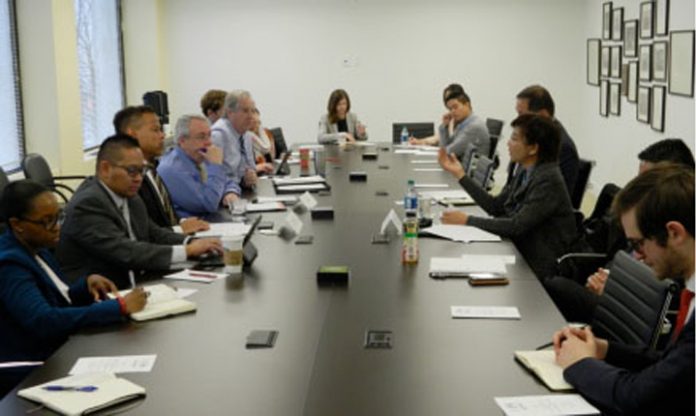
In Photo: Members of the US-Asean Business Council (US-ABC) hosted a roundtable for Trade Undersecretary Nora K. Terrado on February 22 in Washington, D.C.
In Photo: Members of the US-Asean Business Council (US-ABC) hosted a roundtable for Trade Undersecretary Nora K. Terrado on February 22 in Washington, D.C.Photo: Business Mirror

‘FOR the first time in three years, the Philippines made it to the worldwide list of top 20 investment destinations of multinational enterprises,” Trade Undersecretary for Industry Promotion Group Nora K. Terrado told participants in a roundtable organized by the US-Asean Business Council (US-ABC) on February 22 in Washington, D.C.

Terrado said with the country’s 6.8-percent GDP growth in 2016, the Philippines continues to be one of Asia’s fastest-growing economies, exhibiting resilience amid external shocks.

This message highlighted Terrado’s presentation about the country’s improving global competitiveness ranking.

Terrado discussed the current administration’s 10-point socio-economic agenda, which aims to sustain improvements in the Philippine investment climate, support rural development, and further enhance the country’s infrastructure, human capital and social-protection programs.

“The whole government is tasked to continue to improve the ease of doing business in the Philippines,” Terrado said.

As chair for Asean 2017 Summit, the Philippines is poised to highlight the region’s strengths by engaging the international business community, foreign governments and investors through the Asean Business and Investment Program (Abip).

As chairman for the Asean Committee on Business and Investment Promotion, Terrado urged the US-ABC and its members to participate in the business activities to be held in the Philippines, focusing on themes, such as regulatory coherence, micro, small and medium enterprises (MSMEs), women and youth entrepreneurship, and innovation.

Marc Mealy, vice president for policy of the US-ABC, expressed positive feedback after the dialogue with Terrado.

“With the Philippines serving as the current Asean chairman and having one of the highest GDP growth rates in Asia, the representatives from the 13 American multinational companies who participated were keen to receive the undersecretary’s update on current business trends in the Philippines and the economic priorities of the Duterte administration,” Mealy said. “The Council looks forward to conducting our 2017 senior executives business mission to the Philippines later this year.”

The US-ABC members that participated in the dialogue were Coca-Cola, Fluor, Citi and Philip Morris, among others. - BUSINESS MIRROR

Texas Instruments invests $10 million to expand Philippines facility

Null

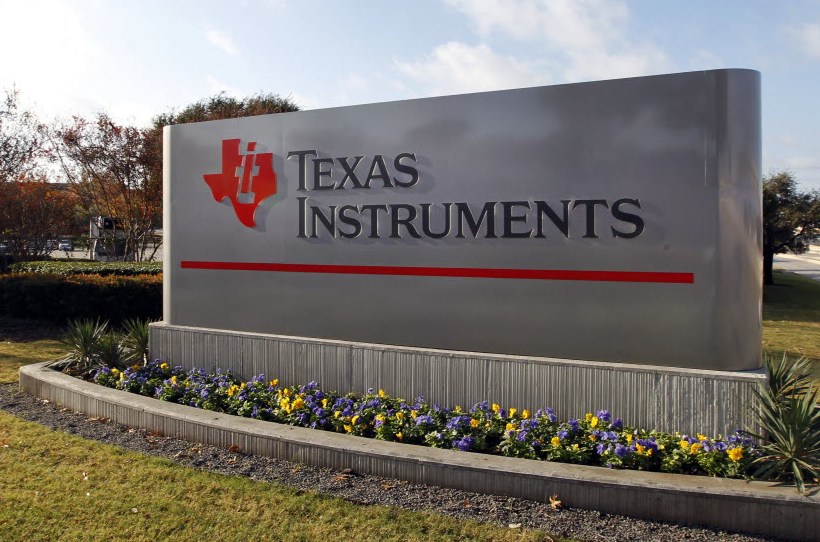
Texas Instruments is a world leading manufacturer of Integrated Circuits (IC) used for mobiles phones and other electronic gadgets. Image: dallasnews.com

Texas Instruments Inc. has confirmed that it’s investing $10 million to expand its product distribution center in Clark Freeport, the Philippines.

A groundbreaking ceremony took place there last week, according to news reports from the Philippines.

It’s part of an overall $1 billion TI said in 2007 that it would invest in its Clark Freeport facilities through 2017, but it has been increased to $1.3 billion, according to a company spokeswoman.

“Our current product distribution center is overflowing; we do not have enough space do an efficient job on distributing,” Mohammad Yunus, president of TI Philippines, told the Pampanga Sun Times in the Philippines. Last quarter, TI shipped 1.5 billion semiconductor units from the Clark Freeport facility and plans to ship 1.9 billion units this quarter, he said.

“We are currently looking on the 2 billion units which could be a new record for any Texas Instrument site anywhere in the world,” Yunus said in the Sun Times.

TI built its first assembly and test site in the Philippines in Baguio City in 1979. In 2009, it opened a second facility in the Clark Freeport Zone,  doubling the company’s capacity in the Philippines. - The Dallas Morning News

Philippine natural and organic products to be featured in Maryland, USA trade show September

Null

Nine Philippine companies will be joining the Natural Products Expo East, the largest natural, organic, and healthy products event in the US East Coast, from September 17 to 19 at the Baltimore Convention Center in Maryland. STAR/File photo

MANILA, Philippines — Nine Philippine companies will be joining the Natural Products Expo East, the largest natural, organic, and healthy products event in the US East Coast, from September 17 to 19 at the Baltimore Convention Center in Maryland.

The Philippine Department of Agriculture (DA) through the DA-Agribusiness and Marketing Assistance Service (AMAS) organized the following natural product exporters to participate in this event—Brandexports Philippines, Inc., Elemie Naturals Inc., GreenLife Coconut Products Philippines Inc., Nutramedica, Inc., Orich International Traders, Inc., Prime Fruits International, Incorporated, Sweet Pacific Foodfarms Product, Team Asia Corporation, and Tropicana Food Products Inc.

A variety of coconut products will be available to the American public such as coconut water, milk, milk powder, flour, cider vinegar, coconut nutraceutical products, desiccated coconut, coconut sugar, organic extra virgin coconut oil and virgin coconut oil beauty pearls. The coconut is known as the tree of life in the Philippines because of the seemingly endless list of products and by-products derived from all its parts.

Other Philippine products to be featured in the trade show are body products made from pili, handcrafted bath soaps, topical scalp products, vinegar, dried mangoes, noodles, juices and fruit juice drinks, camote (sweet potato) and banana chips, condiments and sauces.

Philippine Ambassador to the United States Jose L. Cuisia, Jr. expressed optimism in the growing share of the Philippines in the natural products market and encouraged US buyers to take advantage of the growing demand for such products.

“The Philippines has long been producing natural, organic, and healthy agricultural products as well as nutritionally-dense foods considered ‘superfoods’ abroad. The Natural Products Expo East is the perfect venue for sellers to bring their products to the attention of the US buyers. I am glad Philippine companies, with the help of the Department of Agriculture and our Agricultural Attaché, have penetrated this market. I hope more Philippine businesses will follow soon,” said Ambassador Cuisia.

The 2014 Market Overview of Natural Foods Merchandiser, a leading media source and information provider for the healthy products industry, showed that US nationwide sales of all natural and organic products jumped 9 percent to nearly $99 billion last year.

According to Philippine Agriculture Attaché to the US Dr. Josyline C. Javelosa, this has also led to a growth in the Natural Products Expo.

“More retail buyers are walking the show floor at Expo East than ever before, looking for the newest quality products to bring back to their stores,” Dr. Javelosa said.

The trade show will reportedly bring over 22,000 attendees and more than 1,800 exhibitors, with approximately 30 percent of those exhibiting for the first time and new to the marketplace, according to Natural Product Expo East.

This year, the expo will include for the first time a Farm-to-Market Tour where attendees will have the opportunity to visit some of Baltimore’s nearby farms and retail stores that source from them. - philSTAR

China stock loses $3.2 trillion US Dollars in weeks; Suicide rumor -Economy facing trouble

Null

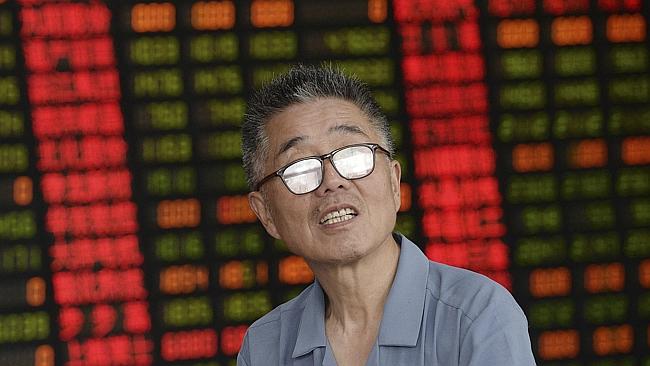
A stock investor looks up in a brokerage house in Shanghai. Chinese authorities have launched frantic efforts to shore up plunging stock prices following another 5.7 per cent decline in the country's main market index on Friday. Source: AP

Chinese chaos worse than Greece: Chinese stock market loses $3.2 trillion, authorities inject cash

WHILE the world worries about Greece, there’s an even bigger problem closer to home: China.

A stock market crash there has seen $3.2 trillion wiped from the value of Chinese shares in just three weeks, triggering an emergency response from the government and warnings of “monstrous” public disorder.

And the effects for Australia could be serious, affecting our key commodity exports and sparking the beginning of a period of recession-like conditions.

“State-owned newspapers have used their strongest language yet, telling people ‘not to lose their minds’ and ‘not to bury themselves in horror and anxiety’. [Our] positive measures will take time to produce results,” writes IG Markets.

“If China does not find support today, the disorder could be monstrous.”

In an extraordinary move, the People’s Bank of China has begun lending money to investors to buy shares in the flailing market. The Wall Street Journal reports this “liquidity assistance” will be provided to the regulator-owned China Securities Finance Corp, which will lend the money to brokerages, which will in turn lend to investors.

The dramatic intervention marks the first time funds from the central bank have been directed anywhere other than the banks, signaling serious concern from authorities about the crisis.

At the same time, Chinese authorities are putting a halt to any new stock listings. The market regulator announced on Friday it would limit initial public offerings — which disrupt the rest of the market — in an attempt to curb plunging share prices.

While the exact amount of assistance hasn’t been revealed, the WSJ reports no upper limit has been set.

All short-selling — the practice of betting that stocks will fall — has been banned, and Chinese media has rushed to reassure citizens.

Yesterday, shares in big state companies soared in response to the but many others sank as jittery small investors tried to cut their losses, Associated Press reports. The market benchmark Shanghai Composite closed up 2.4 percent but still was down 27 percent from its June 12 peak.

Experts fear it could turn into a full-blown crash introducing even more uncertainty into global markets as Europe teeters on the edge of a potential euro zone exit by Greece, after Sunday’s controversial referendum.

WHAT DOES IT MEAN FOR AUSTRALIA?

For Australia, the market crash in China is likely to impact earnings on key exports iron ore and coal, further slashing government revenue, while also putting downward pressure on the Australian dollar.

Jordan Eliseo, chief economist with ABC Bullion, said it was important to remember that the amount of wealth Chinese citizens have tied up in the stock market is relatively minor compared with western investors.

Stocks only make up about 8 per cent of household wealth in China, compared with around 20 per cent in developed nations.

“The market crash there is generating headlines, but it’s not going to have the same impact as a comparable crash would in a developed market,” he said.

“What it means for Australia, though, is it’s very clear there are some serious imbalances in the Chinese economy, and the rate of growth they’ve enjoyed in the past is over. There’s no question our export earnings are going to take another hit.”

Mr Eliseo predicts Australia is likely to experience “recession-like” conditions such as negative wage growth for many years to come. “I believe that’s going to be the new norm,” he said.

CRACKDOWN AS PANIC TRIGGERS ‘SUICIDE’ RUMOURS

Underscoring growing jitters amid the three-week sell-off, police in Beijing detained a man on Sunday for allegedly spreading a rumor online that a person jumped to their death in the city’s financial district due to China’s precarious stock markets.

The 29-year-old man detained was identified by the surname Tian, and is a manager at a technology and science company in Beijing, police said in a post on their official microblog.

Police said Tian’s alleged posting of the rumor took place Friday and called on internet users to obey laws and regulations, not to believe and spread rumors, and to cooperate with police.

The state-run Xinhua news agency reported that Tian allegedly posted the rumors with video clips and screenshots Friday afternoon.

The post, which is said to have gone viral, “provoked emotional responses among stock investors who suffered losses over the past weeks”, Xinhua said.

Xinhua added that a police investigation showed that the video in question had been shot on Friday morning in the eastern Chinese province of Jiangsu where a man had jumped to his death. Local police there were investigating that case, Xinhua said.

The original post was unavailable Sunday on China’s tightly controlled social media, where authorities are quick to delete controversial material. - Jews News /  News.com.au

Philippine Economy is the Strongest in the World - Findings of Washington USA Think Tank


Philippines has most resilient economy – study


(CNN Philippines) — Should an economic crisis akin to last decade's Great Recession happen again, the Philippines would be the most "resilient" country and be able withstand it, despite its status as an emerging-market economy.

That's the assessment of Center for Global Development (CGD), a think tank based in Washington, D.C.

It's not that hard to imagine another financial crisis happening: Growth in China — the world's second largest economy — has slowed, the United States' bull market hasn't had a correction since 2011, and in the Eurozone, debt-ridden Greece has yet to strike a deal with its creditors.

Economist Liliana Rojas-Suarez of the CGD recently created a "resilience indicator" that measures the vulnerability of an economy to future financial shocks.

Her metric looks into several economic indicators that fall under two categories:
  • a country's ability to withstand external shocks 
  • government's ability to "rapidly" implement policies that counteract the effects of such shocks 
"I compare the values of the identified variables in 2007 (the preglobal financial crisis year) with the respective values at the end of 2014," she said.

Rojas-Suarez explained: "A country is said to be highly resilient to adverse external shocks if the event does not result in a sharp contractions of economic growth, a severe decline in the rate of growth of real credit and/or the emergence of deep instabilities in the financial sector."

Of the 21 countries she studied, Rojas-Suarez ranked the Philippines as the most resilient economy, ahead of South Korea and China, which fall at second and third, respectively.

Rojas-Suarez found that the Philippines posted a strong improvement in its indebtedness. The debt indicators had substantial influence over the country's ranking.

For example, she points out that the country cut in half its external debt to GDP ratio "from around 40 percent in 2007 to around 20 percent in 2014." This figure stands in stark contrast with most whose ratios are "without significant changes" within that same time period.

She also cites the country's lower government debt to GDP ratio which stood above 40% in 2007, and subsequently shrank to below that figure in 2014.

Likewise, the country also stood out because of its improved inflation performance in 2014 relative to 2007. Rojas-Suarez pointed out that inflation rates have been within the government's targets.

Latin American countries did not do well in the study: "Four of the six Latin American countries in the sample have deteriorated their positions in the ranking. This includes Argentina, which now holds the last position. "

Apart from "bad luck in terms of unfavorable trade," Rojas-Suarez explained that such countries ranked lower because of "the squandering of opportunity to implement needed reforms in the good post-crisis years."

Her study ultimately affirms a long-running cliché: An ounce of prevention is better than a pound of cure.

"Policy decisions taken in the precrisis period played a major role in explaining a country's macroeconomic performance during the global economic crisis (of last decade)," explained Rojas-Suarez.

"[I]nitial conditions at the onset of a severe adverse external shock matter a lot. The good news is that, besides the commodity price shock, the most feared external shock: a sudden rise in interest rates in the US has not (yet) materialized. Time is still on the side of emerging markets’ authorities." - CNN

World’s newest & stealthiest $3Billion USD destroyer will counter China in West Philippines


This file image released by Bath Iron Works shows a rendering of the DDG-1000 Zumwalt, the U.S. Navy's next-generation destroyer, which has been funded to be built at Bath Iron Works in Maine and at Northrop Grumman's shipyard in Pascagoula, Miss. (AP/Bath Iron Works)

A super-stealthy warship that could underpin the U.S. navy's China strategy will be able to sneak up on coastlines virtually undetected and pound targets with electromagnetic "railguns" right out of a sci-fi movie.

But at more than $3 billion a pop, critics say the new DDG-1000 destroyer sucks away funds that could be better used to bolster a thinly stretched conventional fleet. One outspoken admiral in China has scoffed that all it would take to sink the high-tech American ship is an armada of explosive-laden fishing boats.

With the first of the new ships set to be delivered in 2014, the stealth destroyer is being heavily promoted by the Pentagon as the most advanced destroyer in history -- a silver bullet of stealth. It has been called a perfect fit for what Washington now considers the most strategically important region in the world -- Asia and the Pacific.

Though it could come in handy elsewhere, like in the Gulf region, its ability to carry out missions both on the high seas and in shallows closer to shore is especially important in Asia because of the region's many island nations and China's long Pacific coast.

"With its stealth, incredibly capable sonar system, strike capability and lower manning requirements -- this is our future," Adm. Jonathan Greenert, chief of naval operations, said in April after visiting the shipyard in Maine where they are being built.

On a visit to a major regional security conference in Singapore that ended Sunday, U.S. Defense Secretary Leon Panetta said the Navy will be deploying 60 percent of its fleet worldwide to the Pacific by 2020, and though he didn't cite the stealth destroyers he said new high-tech ships will be a big part of its shift.

The DDG-1000 and other stealth destroyers of the Zumwalt class feature a wave-piercing hull that leaves almost no wake, electric drive propulsion and advanced sonar and missiles. They are longer and heavier than existing destroyers -- but will have half the crew because of automated systems and appear to be little more than a small fishing boat on enemy radar.

Down the road, the ship is to be equipped with an electromagnetic railgun, which uses a magnetic field and electric current to fire a projectile at several times the speed of sound.

But cost overruns and technical delays have left many defense experts wondering if the whole endeavor was too focused on futuristic technologies for its own good.

They point to the problem-ridden F-22 stealth jet fighter, which was hailed as the most advanced fighter ever built but was cut short because of prohibitive costs. Its successor, the F-35 Joint Strike Fighter, has swelled up into the most expensive procurement program in Defense Department history.

"Whether the Navy can afford to buy many DDG-1000s must be balanced against the need for over 300 surface ships to fulfill the various missions that confront it," said Dean Cheng, a China expert with the Heritage Foundation, a conservative research institute in Washington. "Buying hyperexpensive ships hurts that ability, but buying ships that can't do the job, or worse can't survive in the face of the enemy, is even more irresponsible."

The Navy says it's money well spent. The rise of China has been cited as the best reason for keeping the revolutionary ship afloat, although the specifics of where it will be deployed have yet to be announced. Navy officials also say the technologies developed for the ship will inevitably be used in other vessels in the decades ahead.

But the destroyers' $3.1 billion price tag, which is about twice the cost of the current destroyers and balloons to $7 billion each when research and development is added in, nearly sank it in Congress. Though the Navy originally wanted 32 of them, that was cut to 24, then seven.

Now, just three are in the works.

"Costs spiraled -- surprise, surprise -- and the program basically fell in on itself," said Richard Bitzinger, a security expert at Singapore's Nanyang Technological University. "The DDG-1000 was a nice idea for a new modernistic surface combatant, but it contained too many unproven, disruptive technologies."

The U.S. Defense Department is concerned that China is modernizing its navy with a near-term goal of stopping or delaying U.S. intervention in conflicts over disputed territory in the South China Sea or involving Taiwan, which China considers a renegade province.

China is now working on building up a credible aircraft carrier capability and developing missiles and submarines that could deny American ships access to crucial sea lanes.

The U.S. has a big advantage on the high seas, but improvements in China's navy could make it harder for U.S. ships to fight in shallower waters, called littorals. The stealth destroyers designed to do both. In the meantime, the Navy will begin deploying smaller Littoral Combat Ships to Singapore later this year.

Officially, China has been quiet on the possible addition of the destroyers to Asian waters.

But Rear Adm. Zhang Zhaozhong, an outspoken commentator affiliated with China's National Defense University, scoffed at the hype surrounding the ship, saying that despite its high-tech design it could be overwhelmed by a swarm of fishing boats laden with explosives. If enough boats were mobilized some could get through to blow a hole in its hull, he said.

"It would be a goner," he said recently on state broadcaster CCTV's military channel.

Foxnews

US & Philippines Marines Begin Drills Near Spratlys

About 3,000 U.S. and Filipino marines’ soldiers started two weeks of annual military drills in the Philippines on Monday that will include a hostile beach assault exercise near the disputed Spratly Islands.

U.S. Marine 1st Lt. Nick Eisenbeiser said the Oct. 17-28 maneuvers would focus on honing their joint capability to ensure regional security and were not aimed at China or any country as an imaginary target.

"They shouldn't get worried," Eisenbeiser, when asked if the exercises were aimed at China, who’s growing naval power has set off concerns in the region. "We're assisting the Chinese in ensuring that their region is peaceful."

The exercises would ensure that U.S. and Philippines forces could jointly respond to "anything that arises," he said.

The United States irked Beijing last year by asserting that Washington had a national security interest in the peaceful resolution of the disputes over the Spratly Islands.

The potentially oil-rich islands are located in the West Philippines Sea (South China Sea), between Vietnam, the Philippines and Malaysia, and straddle some of the world's busiest sea lanes.

China seeks to resolve the disputes through bilateral talks with five other claimants, including the Philippines. Beijing has rejected any U.S. role in the resolution of the disputes over the islands.

Philippine military spokeswoman 1st Lt. Cherryl Tindog said an Oct. 27 drill will involve a mock raid by about 100 U.S. and Filipino marines from an American warship to capture a hostile beachhead west of Palawan province, which faces the South China Sea.

Other events include a live-fire exercise in Crow Valley in Tarlac province, north of Manila, and medical missions and school constructions in several Philippine towns.

One Filipino-occupied island was proposed as a possible site for joint training but was ruled out to avoid antagonizing China and other claimants. The island lies close to a Spratly reef occupied by Chinese forces and an island separately occupied by Vietnamese forces. The information came from two officials who spoke on condition of anonymity because they were not authorized to talk to reporters.

Philippines marine Brig. Gen. Eugenio Clemen said the exercises with U.S. forces would be confined to the country's territory so "nobody could question that."

The Philippines and Vietnam, another Spratlys claimant, have separately accused Chinese vessels of intruding into what they say is their part of the contested areas and of disrupting oil explorations in their territorial waters this year.

Both countries have since discussed those allegations with China and renewed calls for the peaceful resolution of the disputes, easing monthslong tensions.

MDT - USA obliged to defend the Philippines in Spratlys against any invasion

The hardest point of America is to stand in between the two roles in the same case and the same issue.   USA is supposed not to take one side on any countries with conflict but America have no escape for the Philippines as they signed an agreement called Mutual Defense Treaty (MDT) in 1951 to take effect in 1952. The MDT was signed between US and the Philippines after 5 years of giving independence to the Philippines. The Mutual Defense Treaty (MDT) obliged America to defend the Philippines to any External assault or attack to the Philippines' territory.

The binding of the MDT with PHL-US is clear that obliged America to defend the Philippines to any External assault or attack to the Philippines” even spratlys islands is not mentioned since the Spratlys is within 200 Nautical Miles Exclusive Economic Zone of the Philippines and countries invading the Philippine waters is subject for retaliation from the Philippines' forces and US Forces.

U.S. forces are obliged to help defend Filipino troops, ships or aircraft under a 1951 Mutual Defense Treaty if they come under attack in the disputed Spratly Islands in the South China Sea, Philippine officials said, citing past American assurances.

The potentially oil- and gas-rich Spratly Islands have long been regarded as one of Asia's possible flash points for conflict. China, the Philippines and Vietnam have been trading barbs and diplomatic protests recently over overlapping territorial claims, reigniting tension.

Complicating the issue is the role the United States could play in resolving the disputes. A Mutual Defense Treaty signed by U.S. and Philippine officials in Aug. 30, 1951, calls on each country to help defend the other against an external attack by an aggressor in their territories or in the Pacific region.

Amid renewed tensions in the Spratlys, questions have emerged whether the treaty would apply if ill-equipped Philippine forces come under attack in the islands, all of which are claimed by China. Parts also are claimed by Brunei, Malaysia, the Philippines, Taiwan and Vietnam.

The Philippine Department of Foreign Affairs said in a policy paper that the treaty requires Washington to help defend Filipino forces if they come under attack in the Spratlys, citing U.S. diplomatic dispatches that defined the Pacific region under the treaty as including the South China Sea. The South China Sea was not specifically mentioned in the pact.

A copy of the policy paper was seen by The Associated Press on Wednesday.

Philippine Foreign Secretary Albert del Rosario also said in a recent interview that American officials have made clear that Washington would respond in case Filipino forces come under attack in the South China Sea.

Del Rosario said by telephone from Washington that he would discuss the Spratly disputes, along with issues related to the 1951 defense treaty, and other regional security concerns with U.S. Secretary of State Hillary Rodham Clinton when they meet Thursday.

The U.S. Embassy in Manila declined to discuss details of when the pact would apply.

"As a strategic ally, the United States honors our Mutual Defense Treaty with the Philippines," said Alan Holst, acting public affairs officer at the embassy. "We will not engage in discussion of hypothetical scenarios."

The defense treaty, which came into force in 1952, defined an attack as an armed assault on "the metropolitan territory of the parties" or their "armed forces, public vessels or aircraft in the Pacific."

While the U.S. has a policy of not interfering in territorial disputes, the Philippine paper said "it may be construed that any attack on our vessels, armed forces or aircraft in the Spratlys would make the treaty applicable and accordingly obligate the U.S. to act to meet the common dangers."

China has urged the United States to stay out of the territorial disputes in the South China Sea, saying they should be resolved through bilateral negotiations.

On Wednesday, Chinese Vice Foreign Minister Cui Tiankai warned that Washington risks getting drawn into a conflict should tensions in the region escalate further.

Washington views the sea lanes in the area as strategically important.

"If the United States does want to play a role, it may counsel restraint to those countries that have frequently been taking provocative action and ask them to be more responsible in their behavior," Cui said at a briefing.

He later added, "I believe that individual countries are actually playing with fire, and I hope that fire will not be drawn to the United States."

The Philippines has accused China of intruding at least six times in Manila-claimed areas in and near the Spratlys since February. Among the most serious was a reported firing by a Chinese navy vessel on Feb. 25 to scare away Filipino fishermen from the Jackson Atoll.

The Philippines, whose poorly equipped forces are no match for China's powerful military, has resorted to diplomatic protests. President Benigno Aquino III insisted Friday that his country won't be bullied by China and said Beijing should stop intruding into waters claimed by Manila.

The battle for ownership of the Spratlys has settled into an uneasy standoff since clashes involving China and Vietnam killed more than 70 Vietnamese sailors in 1988.


Communist China don't deserves chair, power and authority in the United Nations

The United Nations Convention on the Law of the Sea (UNCLOS) guaranteed 200 Nautical Mile Economic Zone for the Philippines, China, Vietnam, Brunei, Malaysia and Indonesia. UNCLOS did not show any China’s territory in the West Philippines Sea’s Spratlys. China’s limit is only until Paracel islands.  The Philippines recorded already 6 invasions by china to the West Philippine Sea as of June 16, 2011.

China’s temporary pedestal

Inspite of China’s temporary and limited power as they are not yet so powerful compared to America; they are already starts bullying the small neighboring countries around them. Just recently, we could see how the Chinese war planes browbeaten the Philippine warplane patrolling in the Kalayaan Islands Group (KIG), province of Palawan Philippines. China has been accused for 6 times invasion into the Philippines waters in just 4 months in 2011. It has been reported that China threaten and fired the Filipino fishermen in the West Philippine Sea, just few kilometers from the shore of Palawan. China also had been accused of invading the Philippine horizon in the Islands and waters of the West Philippine Sea. Further, they also conduct a research in the Philippine waters without asking any permission to the Philippines’ government. China insisted after the Philippines protest as they said it is within their jurisdiction rejecting the UNCLOS international laws of sea 200 Nautical Miles Exclusive Economic Zone of all the countries surrounding the area. Part of china’s dream to create a Chinese empire, they issued a new 9 dotted map claiming the Philippines shore, waters and islands in the West Philippines after the result of study and research that the West Philippines Sea ranked as the 4th largest Oil and Gas Deposit in the world in line with the Arab countries. Not only in the Philippines; China also harassed the government owned oil and exploration of the communist Vietnam (Petro Vietnam). They also want to claim the waters and islands of Malaysia, Brunei and Indonesia.

Spratlys Islands of the Philippines

The Spratlys or also called as Kalayaan Island Group (KIG) or Freedom Land of the Philippines is composed of small islands, reefs and atolls. It is located in the West Philippines Sea (formerly called South China Sea) that links the Philippine Sea -Pacific Ocean and the Indian Ocean. All its islands are coral, low and small, about 5 to 6 meters above water, spread over 160,000 to 180,000 square kilometers of sea zone (or 12 times that of the Paracels), with a total land area of 10 square kilometers.  The Spratly Island is - whole or partially claimed by the Philippines as it is in the West Philippine Sea, within 200 Nautical Mile Exclusive Economic Zone (UNCLOS – International Laws of Sea). The Philippines is the closest archipelagic country in Asia with the same features of the Spratlys. The Philippines also is the first country legally pronounced its ownership to the world through a Filipino navigator Tomas Cloma in 1955.  With UNLCOS 200 Nautical Mile Exclusive Economic Zone[200 Nautical Mile or = 370.40 Kilometers because 1 Nautical Mile (NM) = 1.85 Kilometer and / or 1.15 Miles (mi)], the Philippines, China and Vietnam gains their rights to explore their seas with such International Laws of Sea limit. The disputed areas are just in between the Philippines and Vietnam’s 200 Nautical Mile EEZ but disputes arisen in the non disputed areas which most are in the Philippines' water when other claimants including Vietnam, China, and Malaysia overlapped their claim into the Philippines Waters. In the UNCLOS 200 Nautical Mile Exclusive Economic Zone- the countries have rights over spratlys are only the Philippines, Malaysia, Brunei and Indonesia. For China and Vietnam their limit is just until the Paracels. In between the Paracel and Spratly is the international water which is disputed. The Malaysian claimed is based on the North Borneo which is called now as Sabah the old Sultanate of Sulu, Philippines which was turnover by Britain to Malaysia as gift for friendship and alliance. The Philippines still on their stake to take back the North Borneo and planned to void the turnover of Britain because Britain is not part of the country and they don’t have jurisdiction over the sultanate of Sulu, Philippines.

China, the 666; the beast in the phrase of the Holy Bible

China is not yet fully installed in the full power like America, but now they are start crawling to claim neighboring countries. Analysts and concerns asked- so how much more if china will become the powerful country in the world. China is also named as the golden dragon. The Holy Bible mentioned that time will come, the beast and dragon will rule the earth and the world slowly decrypts the phrases of the Bible which slowly pointing the communist china as the 666 dragon. In china religion is limited. China’s government will jail you if you will gather to praise Jesus Christ. The Bible mentioned about the Anti-Christ; and the existence of China as the golden dragon is performing the - what explained in the “Revelation” of the Holy Bible as anti Christ. If China will win over the Spratlys, it could be the time that china will take over the West Philippine Sea, and the dragon would have the potential to take over and rule the world as they would gain more power in the Oil and Gas deposit in the area of the West Philippines Sea. China might promote satanic act and 666 around the globe and might vanished the human rights law and control every breath of every living creature in earth. 

It’s not yet too late to boycott all products from china so the demon will stop growing. USA, the most powerful peaceful nation must start cutting the evil desire of china. Even the USA which is the most powerful country, they did not abuse their power and authority. USA promotes justice and human rights to the entire humanity as a good model to the countries of the world. Opposite on what happen in china, they are communist and anyone will against the government will die. Anyone will gather for their religions like Christianity will be jailed. USA is not like that. The America is a good leader with capability to discipline and educate other leaders.

If China will win against the battle for the Spratly of the Philippines, the world would have imbalance of power both economically and leadership. If the Philippines will fail to protect their sovereignty especially in the Kalayaan Island Group, it is not the only loss of the Philippines but it’s a big loss of the world as the anti Christ 666 dragon china will rule the earth and they could control everything. The loss of the Philippines is the loss of the entire humanity. The only “key” left to jail this dragon to remain its cage is the Philippines the country of the people of God dominated by Christianity. As United States of America a chosen country to protect the world from the evil desire of any country like China and their allies, USA have the role to protect the countries who exercise freedom and justice and they have the role to protect the “key” to remain the dragon in jail which is the Philippines. We could not change the destiny of the Earth but we could protect the world and its people from totally damaged. We can delay the phrases revealed in the Holy Bible of “The Revelation” the beast, the dragon and the 666 will rule the earth before the coming of Christ.

The Philippines and the MDT with USA

As part of the agreement between the Philippines and the USA (MDT) or Mutual Defense Treaty; the United States is obliged to protect the Philippines and the only way to do it is to restore the presence of the USA in areas of the Philippines. If the USA will install their airbase in the Spratlys, then they could discipline china’s rude illusion in the Southeast Asia that would affect the world. USA and allies must protect the countries which are the subject of the illusion of China that might result to spark the unexpected Third World War (WWIII). How comes the very far China with 1000 Miles distance of the east Asia will crawl to claim the Philippines of the Southeast Asia? .

The Philippines and China in the Ancient times

It is undeniable that before the invasion of the Spain to the Philippines prior the year 1300 China already makes business with the Philippines peacefully. SPAIN, USA and British is not there in Asia, China and the Philippines live peacefully and China even use some islands of the Philippines which is the Spratlys while conducting business with the Philippines. China usually has the stopover in Spratlys before coming and leaving to the Main Islands of the Philippines (Luzon, Mindanao & Visayas).  China also continues their trading to Indonesia passing through the Philippine waters.  China now is slowly grabbing power both economy and leadership in the global community. What will happen if China will be fully installed as the most powerful country? China becomes greed and wants to betray the friendship with the Philippines that established since ancient time.  China must wakeup; if china wants peace then they must have to protect the still weakening friendship with neighbors because the reason of the recent conflict  is because of china’s illusion to claim the islands and waters of the West Philippines, and islands of the communist Vietnam in Paracel.


Investment Recommendation: Bitcoin Investments

Live trading with Bitcoin through ETORO Trading platform would allow you to grow your $100 to $1,000 Dollars or more in just a day. Just learn how to trade and enjoy the windfall of profits. Take note, Bitcoin is more expensive than Gold now.


Where to buy Bitcoins?

For Philippine customers: You could buy Bitcoin Online at Coins.ph
For outside the Philippines customers  may buy Bitcoins online at Coinbase.com